
GaadiWaadi –

Hyundai’s Tata Punch.ev rival, aimed primarily at urban commuters, now less than 12 months away from its world premiere
The Hyundai Creta Electric launched last year was the company’s first locally manufactured EV in India. Two years later, in early 2027, the South Korean automaker will introduce another India-made EV, which will be a compact SUV. Here are five things you need to know about the upcoming Hyundai EV:
1. Bespoke EV platform
While the Creta Electric is a model converted from the ICE Creta, the compact EV will be a model designed and engineered from the ground up. It will be based on a dedicated EV platform called ‘E-GMP (K)’. This means Hyundai will have more freedom with the design of the vehicle and be able to make it more spacious than a similarly-sized ICE vehicle.
2. Rugged exterior
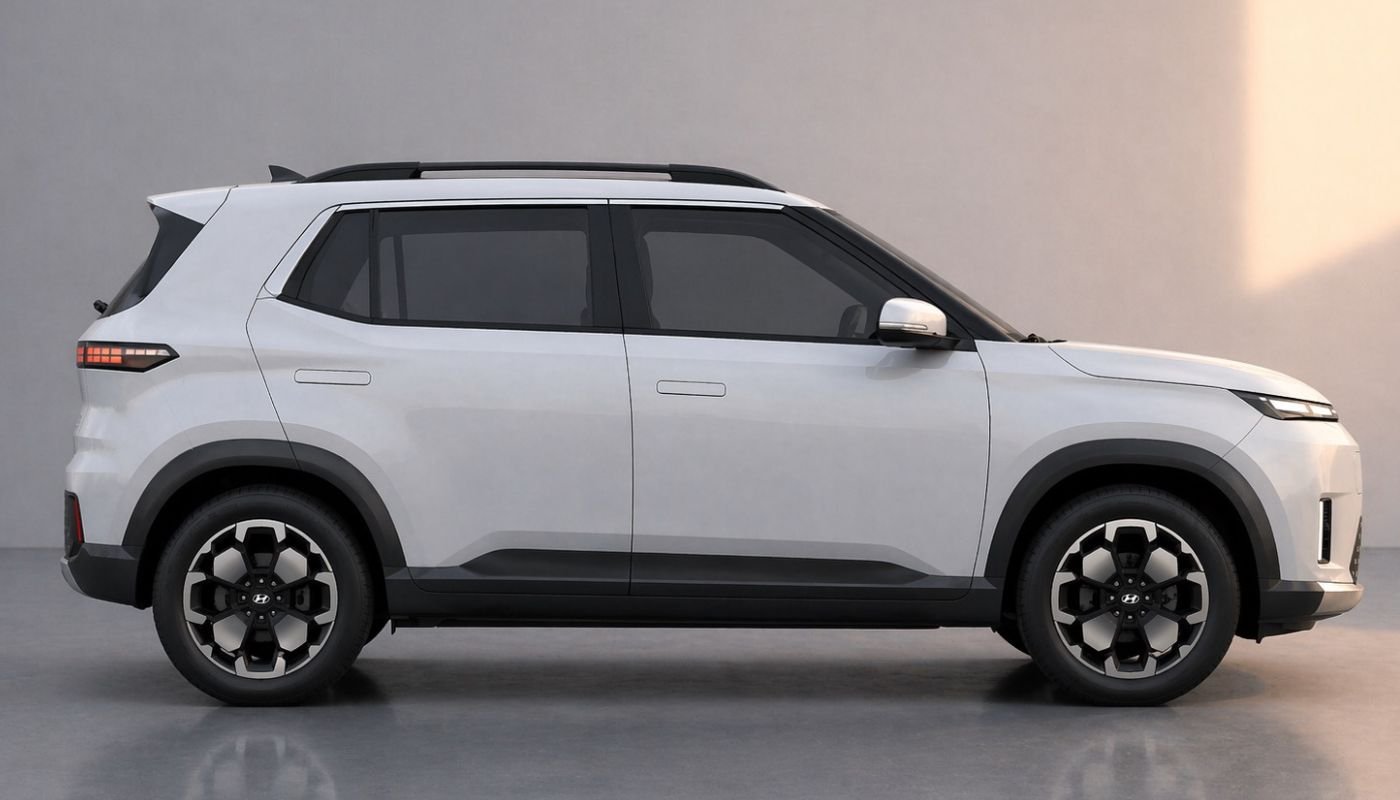
 The Hyundai compact EV will have a proper SUV character with a boxy shape, high ground clearance, raised roof rails, and squarish windows. Black protective cladding across the length and faux skid plates may further amplify its rugged styling.
3. Pixel lighting elements
Like every new Hyundai EV on the market, the upcoming compact EV will feature signature pixel lighting elements for a futuristic look. At the front, four central dots will represent the brand’s “H” letter in Morse code, and the same pattern will be seen in the daytime running lights as well, which will be positioned separately from the low- and high-beam lights. At the rear, the sleek combination lamps will incorporate this light signature.

4. New cockpit displays
The Hyundai compact EV will debut the brand’s new cockpit display layout in India, comprising a slim digital instrument cluster and a large, tablet-style touchscreen infotainment system, both positioned separately. The former will likely measure 9.9 inches diagonally, and the latter will likely be a 12.9-inch panel. Both will run a newly developed Android Automotive OS-based software.
5. Two variants
Hyundai will likely offer the compact EV in a standard-range variant and an extended-range variant, both with a single-motor FWD setup but featuring different motors and different battery packs. The battery packs will likely consist of LFP cells, sourced locally from Exide Energy, to keep the costs low. The extended-range variant should be capable of covering a distance of somewhere in the 475-500 km range on a single charge.
The post 5 Things You Need To Know About Upcoming Hyundai Compact EV appeared first on Gaadiwaadi.com – Latest Car & Bike News by Team GaadiWaadi.